Beyond the Human Fitness Bottleneck & Single-Shot Prompts
For over 35 years, evolutionary art systems—pioneered by William Latham and Stephen Todd's Mutator and FormGrow systems at IBM UK Scientific Centre in the late 1980s—relied on a human artist to manually inspect and breed each generation of 3D organic forms. While this gave artists deep structural control, the "human fitness bottleneck" limited evolutionary runs to a few dozen generations before fatigue set in.
Conversely, modern single-shot text-to-image generators produce instant images from a prompt, but strip the artist of structural lineage, iterative exploration, and parametric 3D control.
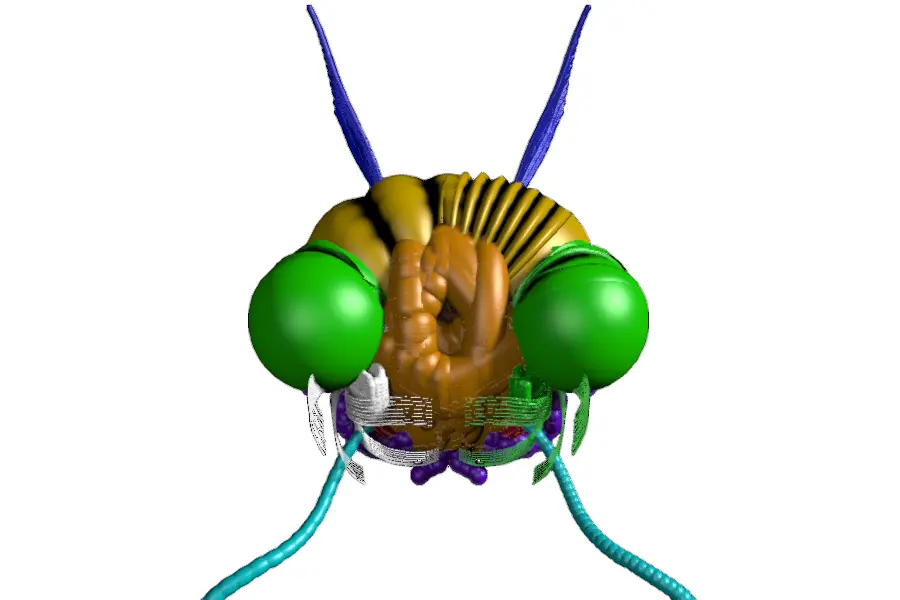
Evolution and Foundation introduces a third paradigm—Foundational Evolution—by placing a multimodal vision-language foundation model (Google's Gemini) inside an open-ended evolutionary loop as an aesthetic critic and curator over rich procedural grammars (FormGrow 3D organic horned structures, Trinions mathematical surfaces, and procedural visual forms).
Key Technical & Artistic Innovations
1. "Curator, Not Creator" Architecture
Rather than asking an LLM to directly write complex 3D parametric genes (which frequently violates tight mathematical and geometric invariants), the system decouples generation from evaluation. The procedural Mutator engine handles genetic representation, transcription, mutation, and multi-angle 3D rendering, while the foundation model acts strictly as an aesthetic curator evaluating rendered phenotypes against natural-language artistic briefs.
2. Randomized Pairwise Binary Tournaments
Vision-language models exhibit strong spatial and positional biases when asked to score or rank grids of images simultaneously. To overcome this, candidate 3D forms compete in randomized pairwise binary tournaments across 200+ generations. In each bout, Gemini compares two multi-view renders head-to-head and outputs both a winner decision and a critical natural-language rationale, which are then aggregated by a high-level summary model across the generation.
3. Creative Disruption (PixelScore & Dynamic Mutation Scheduling)
Because pure foundation-model selection can converge prematurely onto a safe, stereotypical interpretation of a prompt, the system injects low-level visual novelty signals (PixelScore disruption—periodically inverting or perturbing fitness using low-level pixel statistics) alongside dynamic mutation rate schedules. These controlled shocks jolt populations out of local aesthetic optima and sustain open-ended morphological diversity across hundreds of generations.
4. Interactive Physical & Web Installations
At London's OXO Gallery, large-format archival prints of evolutionary lineages were accompanied by real-time body-tracking gallery projections—where visitors steered evolutionary branches with physical movement—and interactive 4K canvas explorers tracing every mutation, survivor, and culled sibling across 200 generations.